Shuriken Sprint
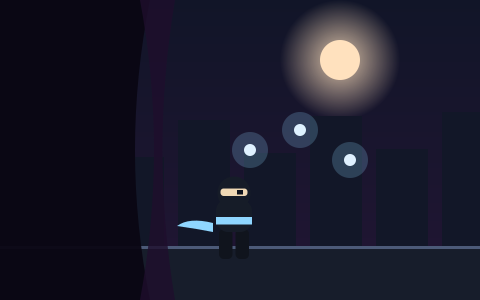
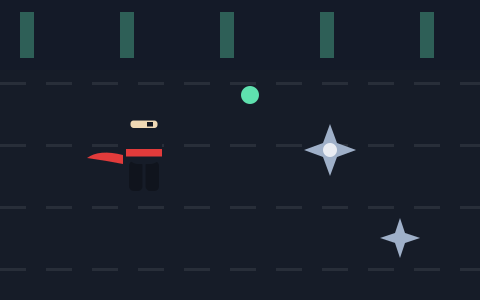
Switch lanes to dodge spinning discs and keep a five-step combo alive.
Action games on Ninja Arcade are about reading a threat and responding before it reaches you. There is no damage model, no health bar and no weapon handling — the "combat" is entirely abstract: a spinning practice disc rolls down a lane, and you either move or you do not.
That abstraction is deliberate. These are arcade timing challenges with a ninja theme, designed to be readable at a glance and fair to retry.
Switch lanes to dodge spinning discs and keep a five-step combo alive.
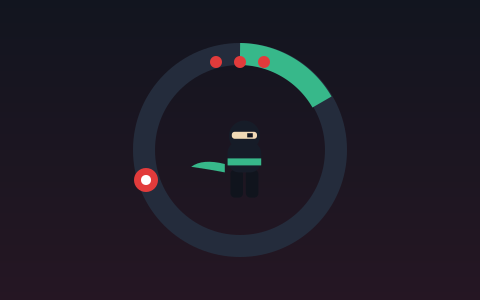
One button. Strike as the marker crosses the zone — three misses and you are out.
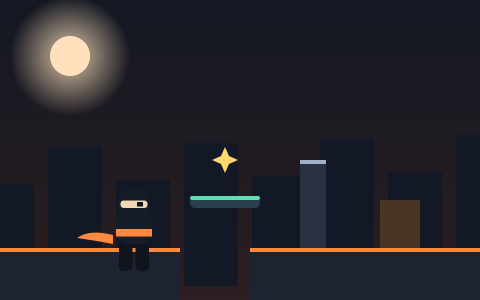
Designed obstacle blocks: crate hops, slide beams, wall jumps and moving platforms.
New players try to react to what is on screen. Experienced players react to what is about to be on screen. The difference matters because human simple reaction time to a visual signal is measured in a few hundred milliseconds, and at high scroll speeds an obstacle can cross the screen in less than that.
This is why every action game here telegraphs. Discs in Shuriken Sprint enter from the right edge with a shadow beneath them before they are dangerous. The target zone in Ninja Reflex is visible for the entire sweep. You are never asked to respond to something that appeared without warning.
Each action game builds a multiplier from consecutive clean actions and drops it on contact. In Shuriken Sprint the multiplier rises one step every six dodges and caps at five. In Ninja Reflex it rises every three clean strikes and caps at ten.
The scoring effect is that a long, careful run is worth far more than a short aggressive one. Going for a token that sits in a lane you are not confident about costs you the multiplier you already earned.
These are the areas this section of Ninja Arcade covers. Each one connects to the games above and to the guides that explain them.
No. There is no blood, no health bar and no depiction of injury. Hazards are abstract spinning discs and barriers, and contact simply ends or interrupts the run.
Ninja Reflex. It uses a single input — any key or a tap anywhere on the play area.
Yes. Shuriken Sprint uses swipes, Ninja Reflex uses a tap, and Ninja Obstacle Master uses swipe up to jump and swipe down to slide.
Reaction games measure identification more than speed. Here is how the telegraphing budget works, and why tracking the gap beats tracking the hazards.
Most runs do not end because of one mistake. They end because of what the player did in the five seconds afterwards.
Raw reaction speed is close to fixed. What improves is how much you have already narrowed the possibilities before the signal arrives — and that is trainable.
Action arcade games are threat-reading exercises. This guide covers telegraphing, the guaranteed-safe-lane rule, how reaction windows are budgeted, and why the best ninja action games keep hazards abstract.