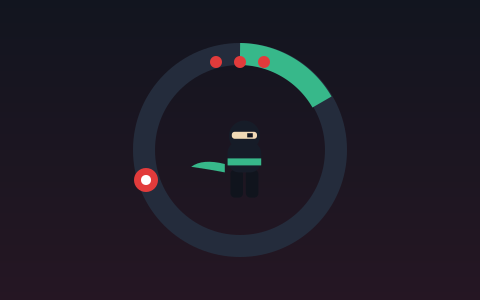
Ninja Reflex
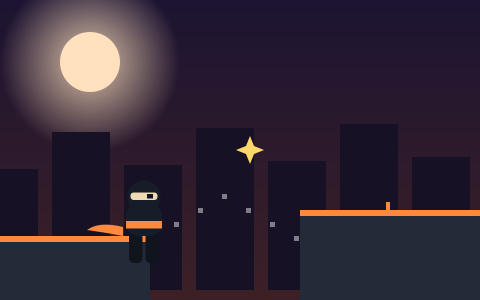
One button. Strike as the marker crosses the zone — three misses and you are out.
Skill games trade reflex speed for precision. The inputs are simple — often a single button — but the margin for error is tight and the challenge is repeatable, which means improvement comes from understanding rather than from luck.
Think of these as puzzles you solve with your hands: what is the right charge level for this gap, what is the right moment in this sweep, which route through this coin field is worth the time it costs?
One button. Strike as the marker crosses the zone — three misses and you are out.
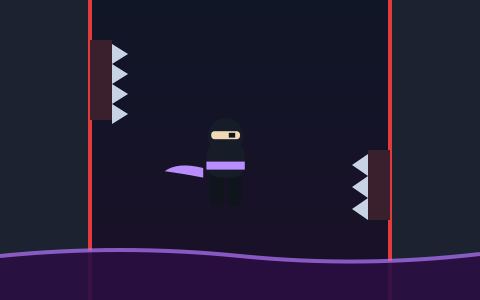
Charge each leap and land dead centre for an eight-step perfect combo.
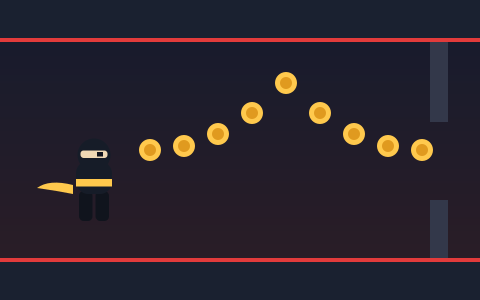
Sixty seconds to weave a route through coin fields and keep the chain alive.
Ninja Reflex looks like a reaction test but plays like a rhythm puzzle. The marker moves at a known, constant speed, and the target zone is visible for the whole approach. Once you stop waiting for the marker to arrive and start pressing slightly before it does, your accuracy jumps immediately.
The scoring reinforces that: a strike in the middle of the zone is worth up to three times a strike at its edge, so the game pays you for solving the timing rather than for surviving it.
Ninja Coin Rush is the only game on the site with a fixed sixty-second round, which turns it into a routing problem. Every coin pattern has a cheap route and an expensive one, and the barrier that follows costs three seconds if you clip it.
Because the combo multiplier resets on contact, the best strategy is usually to skip the outlying coins in a cluster and keep the chain alive rather than collect everything and risk a hit.
These are the areas this section of Ninja Arcade covers. Each one connects to the games above and to the guides that explain them.
Not in the crossword sense. They are skill puzzles: the solution is a timing or routing decision that you execute with the controls.
Ninja Coin Rush. A full round is exactly sixty seconds, so you always know how long a game will take.
We would not claim that. What practice reliably improves is your performance in these specific games, because you learn their patterns and timings.
In a timing game the only question is when. This guide covers window size, approach speed, the two-axis difficulty trick and why forgiveness windows matter.
Skill puzzles are solved before they are executed. Five strategies for treating timing and routing challenges as problems rather than reflex tests.
Some arcade games look like reflex tests but behave like puzzles. This guide draws the line between the two, and explains how to approach timing puzzles and routing puzzles deliberately.
Timing is not reflexes. It is prediction, and prediction is trainable. Here is why confirmation makes you late, and four drills that fix it.
A game with one button has nowhere to hide. This guide explains how one-tap games generate depth through accuracy scoring and two-axis difficulty — and the technique that immediately improves your accuracy.